Welcome to the Apothecary

To go to my website click the link: apothecarygreens.weebly.com

NOTE: The information in this blog does not constitute the practice of medicine, and does not replace the advice of your health care provider.

Showing posts with label spotlight on herbs. Show all posts

Wednesday, 10 December 2014

Be aware of how natural supplements may effect your prescribed medications

Herbal remedies, vitamin and mineral supplements, aromatherapy, and other naturally based therapies are nothing new. Surprisingly however, despite them being around for a long time, it seems that there are still some users of alternative therapies that may not understand that although these remedies are natural they can still be considered medicines and need to be used with the same care that is used with prescribed traditional medicines.

When you are at a Doctor and they ask you what other medication you are using, do you ever consider also telling them about any alternative therapies you are using?

For example, say you were on a prescription to thin your blood, (Warfarin is a commonly used medicine for this) and you were also taking a large amount of Ginseng which is also a blood thinner, the two together could have a major impact on the condition of your blood, thinning it to a dangerous level. 

So if you were taking large amounts of Ginseng, would you tell the Doctor when he asks what other medication you are on? Or would you feel that it is herbal, a natural thing, so its not a medicine? 

Please be careful when taking natural supplements at medicinal/therapeutic levels , they are medicines, and need to be treated with the same care as your traditional pharmaceuticals.


RESOURCE LINKS

CHECKING FOR POSSIBLE HERB-DRUG INTERACTIONS
Potential Interactions Between Alternative Therapies and Warfarin
http://www.woodlandherbs.co.uk/acatalog/cautions.html
.........................................................................................................................
 NOTE: The information in this blog does not constitute the practice of medicine, and does not replace the advice of your health care provider.

Saturday, 20 September 2014

Spotlight on Herbs: Golden Seal

Golden Seal is a very effective ‘ all rounder’ in herbal medicine; it has antibiotic, anti-inflammatory and astringent properties making it versatile in treating many ailments.


Golden Seal contains a chemical called Berberine which has been researched in laboratories and found to have anti bacterial properties. Berberine is an alkaloid with a yellow pigment and a bitter taste. 

Berberine C20H18NO4
As a bacteria fighter, anti-inflammatory and astringent Golden Seal effectively treats skin disorders such as abscesses, eczema, boils and acne.

As an astringent it aids digestion and works as a mild laxative  as well as helping to clean and promote healthy intestinal function.  It assists in regulating the menstrual cycle and reducing excessive bleeding, it soothes mucus membranes and stomach ulcers, as well as being an effective treatment for respiratory infections, irritated eyes, and liver illnesses.

Caution 
Must be avoided during pregnancy as it stimulates uterine contractions.
Should not be used without medical guidance if heart disease, diabetes or high blood pressure is also present.

Please note that the active chemical Berberine in Golden seal can be dangerous to infants, if you are a lactating Mother please do not consume items containing Berberine as it can pass to the child via the milk and be harmful.

.........................................................................................................................
 NOTE: The information in this blog does not constitute the practice of medicine, and does not replace the advice of your health care provider.

Saturday, 2 August 2014

Spotlight on Herbs: Angelica

Angelica Archangelica looks a bit like celery; it is a perennial that grows to around 2 metres high. If you prevent it from flowering the plant will live longer, so nip off those flowers to keep the plant alive!


Angelica Archangelica
All parts of Angelica archangelica are edible, but make sure you have identified the plant correctly, as it resembles Hemlock which is poisonous!!

Traditionally the stalks are candied for use in cake decorations, and leaves which are sweet can be added to fruit dishes, or even some savoury foods to add a sweet contrast.

Medicinally, a tea made from the leaves and ground dry root can be taken to help soothe nervous conditions, and the stems when chewed may relieve stomach gas and bloating.

Angelica when made into a salve, liniment or ointment can be applied to the skin to assist in relieving nerve pain (Neuralgia) and joint pain (such as Rheumatism).


CAUTION: Due to the sugar content Angelica should not be given to people who have Diabetes.

As Angelica is an emmanagogue it should be avoided when pregant

Due to the presence of furanocoumarins prolonged use of Angelica may cause skin photosensitivity or Dermatitis


.........................................................................................................................
 NOTE: The information in this blog does not constitute the practice of medicine, and does not replace the advice of your health care provider.

Tuesday, 22 July 2014

Spotlight on Herbs: Astringents

Astringent herbs constrict, contract, and tone tissue to reduce the flow of fluids such as from blood loss or excessive perspiration. They vary in strength and can be either sedative or stimulant in action.  They all however have the same ultimate action, which is to promote tissue firmness and strengthen the condition of skin or muscles.

Astringents are useful in toning the digestive tract, stopping internal haemorrhages, and in treating throat conditions by toning and cleansing the mucous membranes. Astringent herbs are also used cosmetically to firm and tighten skin.  

In herbs it is often the presence of Tannins that give them this astringent action.

A well known astringent herb is Witch Hazel ( Hamamelis virginiana ), it is used topically as a facial toner and can help reduce the inflammation and redness of acne as well as fight the bacteria on the skin.Witch Hazel is also useful when topically applied to sun burn to reduce the pain and swelling of the effected skin. 

Witch Hazel, when consumed as a tea, can help to alleviate the symptoms of intestinal distress (such as diarrhoea) , and when the tea is steeped and left to cool, it makes an effective gargle to treat sore/blistered throats.


Witch Hazel in bloom


...............................................................................................................
NOTE: The publication of information regarding alternative therapies, herbalism, aromatherapy, and the like, in this blog does not constitute the practice of medicine, and this information does not replace the advice of your health care provider.

Saturday, 21 June 2014

Spotlight on herbs: Rose Geranium

One of my favourite garden shrubs is the Rose Geranium (Pelargonium graveolens),  it is a hardy plant being able to tolerate light frosts as well as drought conditions, has decorative foliage, beautiful pink and purple flowers, and the leaves smell just like roses!


The crushed leaves give off a gorgeous rose scent, which has known relaxant properties. The Rose Geranium is the only edible geranium, and can be used in herbal teas and remedies as a treatment for insomnia or anxiety.   

When planted near vegetable and fruit patches, the Rose Geranium helps  keep away insects that may otherwise eat your vegetable and fruit crops!

The oil has astringent properties and can be used in skin care, it has also been found effective in reducing scar tissue and fighting surface bacterial or fungal infections.

I often pick a bunch of the leaves, crush them slightly, and place them on an oven tray; I then place the oven tray in a low heat oven, so the whole house gets the benefit of the gorgeous relaxing aroma of Rose Geraniums!


Further Reading


...............................................................................................................
 NOTE: The publication of information regarding alternative therapies, herbalism, aromatherapy, and the like, in this blog does not constitute the practice of medicine, and this information does not replace the advice of your health care provider.

Saturday, 14 June 2014

Spotlight on herbs: Wormwood

I thought that today we will explore the interesting herb, Wormwood, and also have a look at some trivia and images associated with it.


Wormwood is also known as:

  • Absinthium
  • Common Wormwood
  • Green Ginger
  • Grand Wormwood

The plant is common in Europe, Asia, North Africa, and North and South America; it is frost hardy and known to survive extremely harsh Northern Hemisphere winters.


Medicinal uses

Historically, as a medicine, Wormwood was used to induce childbirth, but was also used as a means to effect an abortion. It was also taken in a tea to help relieve digestive issues such as vomiting, diarrhoea and bloating.

In modern times, herbalists may prescribe Wormwood to assist in the removal of intestinal parasites. It can also be used in the garden to repel insects.


Trivia

The green faery: Absinthe is a highly alcoholic beverage derived from Wormwood, AKA Artemisia Absinthium.


...............................................................................................................
 NOTE: The publication of information regarding alternative therapies, herbalism, aromatherapy, and the like, in this blog does not constitute the practice of medicine, and this information does not replace the advice of your health care provider.

Monday, 14 April 2014

Herbs in History: Doctrine of Signatures


Definition

The Doctrine of Signatures is a theory that dates back through ancient times and is based on the premise that the plant resembles the part of the body it was meant to cure. It was believed that God had signed the plants to show humans what they could be used for medicinally. Modern day scientists are sceptical of the theory.


History

The writings of the Ancient Roman Doctor, Galen, (131-200 CE) made reference to the idea of a plant or parts of a plant looking similar to the affliction or body part they were a treatment for.

Paracellus, a Swiss healer and alchemist (1493-1541), claimed that similar cured similar, and he observed the similarity of leaves, stems, and flowers on plants and the human anatomy.


"We men discover everything that lies hidden in the mountains by external signs and correspondences, and thus also do we find all the properties of herbs and everything that is in the stones." - Paracelsus

In 1621, a German Theologian and Mystic, Jakob Boehme published a tome entitled 'De Signatura Rerum'. (The signature of all things) It was this book that helped to make the theory more prominent in medical treatment of the time and also promoted if not coined the expression Doctrine of Signatures.
Jakob Boehme (source of  original image unknown)

Example

Doctrine of Signatures: A Walnut when shelled looks similar to a brain, and according to the Doctrine of Signatures is therefore good for the brain.

Fact or Fiction: According to Prevention the antioxidants in walnuts may be beneficial in reducing age and other related brain deterioration.


References/Sources

Science Museum UK
Breverton's Complete Herbal
The Doctrine of Signatures and Herbalism

...............................................................................................................
 NOTE: The publication of information regarding alternative therapies, herbalism, aromatherapy, and the like, in this blog does not constitute the practice of medicine, and this information does not replace the advice of your health care provider.

Tuesday, 25 March 2014

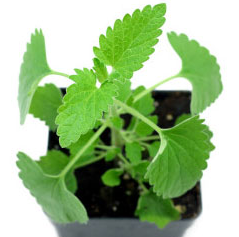
Spotlight on Herbs: Catnip

Tonight's spotlight is on Catnip.


Catnip is a perennial herb from the mint family and is known by many names, including:


  • cat mint
  • catnep
  • catrup
  • cat's heal all
  • cat's wort
  • field balm

The essential oil in cat nip is nepetalactone which is similar in structure to the valepotriates found in the herb Valerian. Catnip acts upon the human nervous system as a calmative, although some people react in the opposite manner as they can with Valerian.

Cats are known to respond to the nepetalactone in catnip, although not all cats react to it.


Catnip is a powerful insect repellent and there is public domain research suggesting that it is at least ten times more effective than DEET (N,N-Diethyl-meta-toluamide) a toxic chemical commonly used in commercial insecticides.


Catnip is a herbalist treatment applied to colds, respiratory infections, sinus issues, and digestive problems. 


Catnip is also a pretty plant that can grow up to 1m in height, with serrated oval leaves, and very pale blue or white flowers.


A versatile and pretty addition to your herb garden!


............................................................................................................... 
NOTE: The publication of information in this blog does not constitute the practice of medicine, and this information does not replace the advice of your health care provider.


Friday, 21 March 2014

Spotlight on Herbs: Sage

In tonight's blogpost, I'd like to put the spotlight on a herb that is well known to many for culinary purposes throughout the ages: Sage.


Origins

Sage is a native plant to the Mediterranean region, its scientific name of Salvia officinalis originates from the Latin word "salvere" which  means "to be saved." 
Sage from my herb garden. (Apothecarygreens.blogger.com.au)


Trivia


  • In 2001 The International Herb Association named sage the herb of the year.
  • The ancient Greeks and Romans used sage to preserve meat.

Cuisine

It has a strong flavour and is often used in stuffing for meat dishes. Sage and onion is a combination often used in stuffing  in traditional English cuisine.

Some great recipes using sage can be found on the BBC food site at this link
.
close up of Sage leaf

Sage is also used medicinally

Sage contains phytosterols which are thought to assist in reducing cholestrol in humans.It also acts as an astringent and as an antiseptic and healer for mucous surfaces.

Used as a gargle  Sage can assist in the healing of minor throat irritations such as a sore throat caused by a common cold. 

Sage in a tea form is also thought to act upon the body to alleviate night sweats and excessive perspiration, as well as to assist regulate hormones in females including being used to help ease some symptoms of menopause.

Sage can also be used to dry up lactation, which is why large quantities of it should be avoided by nursing mothers!

CAUTION: using SAGE medicinally should be avoided in pregnancy.


............................................................................................................................................................
NOTE: The publication of information in this blog does not constitute the practice of medicine, and this information does not replace the advice of your health care provider.

Wednesday, 19 March 2014

What is Herbalism?

When you think of herbalism, what comes to mind? Odd looking eccentrics boiling up unidentifiable plants to create pills, powders and unguents?  Scholarly serious people with large dusty tomes peering short sightedly at a leaf?  Hags with warty noses cackling while they pound down some herbs to make a potion?

Herbalism is about the study and use of herbs and encompasses a wide variety of activities  such as: herbal medicines, using plants to create aromatherapy oils, using plants in decorative craft (think pot pourri and pomanders), botany... herbs are very complex and there are so many different things to study about them!

All sorts of people are interested in herbalism from a variety of occupations, cultures, and countries.
It is a fascinating subject and one I am currently studying in the form of Western Herbal Medicine, as I want to learn more about using plants to heal.

This blog has been created to discuss the things I have learned, to explore different ideas about the 'green' apothecary of nature, to provide DIY to use herbs and other natural ingredients for craft, and to have guest bloggers in to talk about their part in this green apothecary the planet has provided!